
Rostro de Cristo Fellow Kieran Rigney
April 15, 2025
Bridging Miami with Consuelo
October 20, 2025 Planning for birth in the batey
Rachel Nease, an alumna of Rostro de Cristo in Ecuador (Arbolito, 2016-2017), is a social worker and has been focused on supporting women’s safety, health and financial independence in her work in Consuelo. As with all of ASCALA’s work, Rachel works with Haitians and Dominicans of Haitian descent who face exploitation and poverty in the Dominican Republic, despite the reliance on their labor in the sugar and tourism industries. Among her many contributions to the work, Rachel does home visits to survivors of gender-based violence and manages ASCALA’s grant for a small farming collective where women from cañero families will benefit from produce and fish sales to tourist resorts.
One of the most urgent parts of Rachel Nease’s job started by accident.
Because of the fear of deportation present at hospitals and clinics, the Scalabrini sisters invited a trusted, local OB-GYN to offer pre-natal care at ASCALA for expectant mothers living in the batey. The doctor set up appointments on Fridays in Rachel’s office, one of the most private rooms in the building
 One recent Friday, Mariana [a pseudonym to protect her identity] came to her appointment in the early stages of labor. Rachel stayed with her as she labored throughout the day. Because Mariana’s case had some risks, the doctor recommended that she be seen by a specialist. But she went back to the batey instead, determining that the risk of deportation was too high if she went to the public hospital and the cost of the private clinic was out of reach. Rachel and one of ASCALA’s health promoters, Maritza, visited her over the weekend to check in.
Early on Monday, due to complications that changed her calculus, Mariana went to the public hospital, where she gave birth to a baby who died a few days later. As she feared, Mariana was reported by the hospital staff to immigration enforcement and was held in the hospital for 10 days – unable to leave, alone in her grief and postpartum recovery. Only Sr. Eugenia’s appeal for a humanitarian exception allowed Mariana to return to her home.
Since that day, Rachel has accompanied pregnant patients in a new way, applying her social work skills to create choices and agency for them, helping them research options and plan for all the possibilities that could happen when their babies are born.
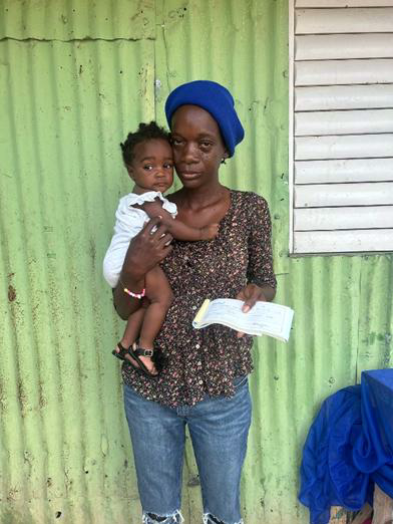 “We want to consider all the possible choices before someone could arrive at the most dire decision between possible deportation and death,” said Rachel. “I created a rigorous intake interview; I’m helping people map their social networks and ask important questions as early on in their pregnancies as possible.”
Questions like: Do you have any money saved that could support a birth at the private clinic? Is there someone who could lend you money or drive you? Do you know someone who might be able to help you get insurance? Is there a program or some kind of informal insurance at the sugar company your family works for? Do you have what you need for the baby?
“At three months along you have time to ask questions, to do research, to save money and to make plans,” said Rachel. “Once someone is in labor, there’s no time left to plan.”
Rachel is supporting more opportunities for expectant mothers to learn. She attended a homebirth first aid class organized by one of the sisters and is encouraging pregnant women to learn from mothers and grandmothers who have experienced giving and attending birth in the batey. What should mothers and families expect as labor progresses? What are some signs to look for that a birthing mother needs medical help? What are the choices available then?
“I want mothers to be able to create a good, specialized birth plan,” said Rachel. “Birth anywhere can be scary and potentially traumatizing, but here, where people are facing such persecution, the best thing we can do is to give agency–show what choices they do have the power to make.”
————-
Because the continued exploitation of Haitians and Dominicans of Haitian descent benefits influential industries and the international community has yet to meaningfully support Haiti, there are few pathways them. Dominican immigration enforcement pursues Haitians on the road, in churches, and in their most vulnerable moments, including childbirth. The Dominican Bishops have called on the government to act with greater compassion and denounced turning hospitals into “immigration checkpoints”. The experience of immigrant mothers in the Dominican Republic is a reminder that recent actions of US Immigrations and Customs Enforcement shatter legal and humanitarian norms and violate core moral imperatives. The U.S. Conference of Catholic Bishops have forcefully spoken against these recent actions and have called for a “fair and humane treatment for our beloved brother and sisters .”
The dehumanizing treatment of mothers like Mariana is not confined to the island. Rostro de Cristo’s support of ASCALA, through fellows like Rachel and funding to support birth education and an emergency fund, is an act of solidarity in the Dominican Republic, a way of being Christ’s hands and feet that is necessary everywhere.